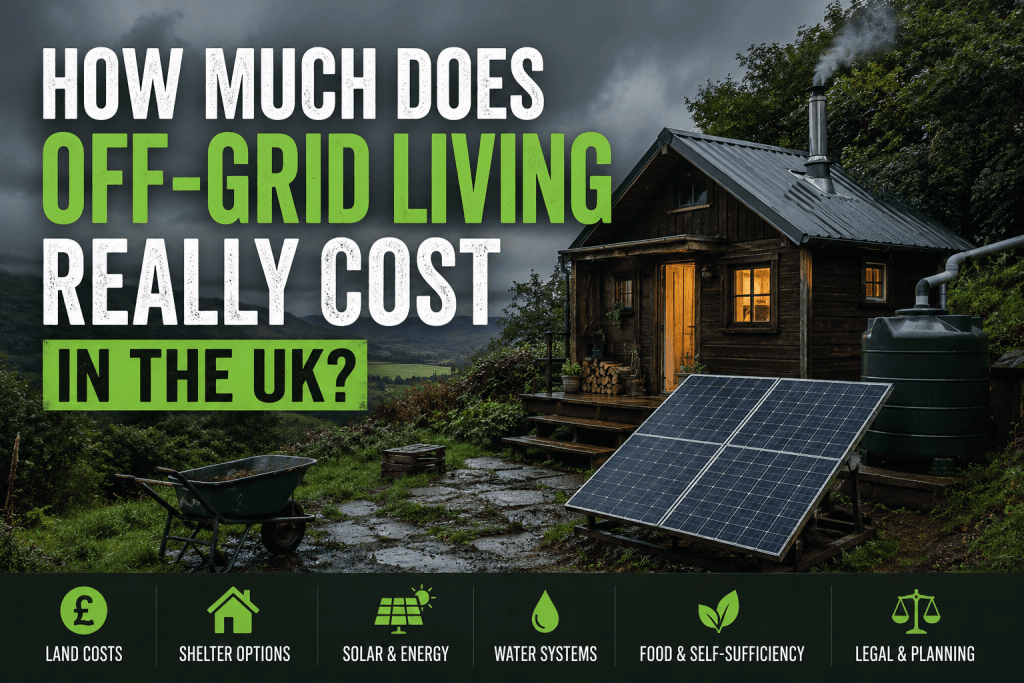
How Much Does It REALLY Cost to Start Off-Grid Living in the UK?
Off grid living UK cost is usually one of the first things beginners worry about — and rightly so. Before you think about land, solar panels, cabins, water systems, or planning permission, you need a realistic idea of what this lifestyle can actually cost.
And fair enough.
If you are thinking about moving towards off-grid living in the UK, you need realistic numbers — not fantasy cabin nonsense, not influencer fluff, and definitely not someone pretending you can build a perfect woodland homestead with £47 and a rusty fork.
The truth is simple:
Off-grid living in the UK can cost anywhere from a few hundred pounds to several hundred thousand pounds.
The real off grid living UK cost depends on how you start. A small beginner setup can be cheap, but a full land-based off-grid home can become expensive fast if you rush into it without a plan.
That sounds vague, but it depends entirely on your route.
- Are you starting small from where you are?
- Are you buying land?
- Are you building shelter?
- Are you installing solar?
- Are you trying to live fully off-grid immediately?
Most beginners get overwhelmed because they try to price the whole dream at once.
That is usually the wrong move.
Off-grid living is not one giant purchase. It is a staged progression.
You build skills. You reduce dependence. You improve systems. You learn before spending big money.
If you are completely new to the idea, start with the Start Here page before making any expensive decisions.
Why People Get Confused About Off-Grid Costs
One of the biggest problems with off-grid living advice is that most examples online are not built for ordinary UK beginners.
You usually see one of two extremes:
- luxury eco-homes that cost more than a normal house
- hardcore survival setups that look like emotional damage with a wood burner
Neither is very helpful if you are trying to understand the real off grid living UK cost from a practical starting point.
The UK also has its own complications:
- land is expensive
- planning rules are strict
- weather is wet and inconsistent
- rural access can be difficult
- many online examples are American and do not translate well
A 40-acre American homestead is not the same thing as a small UK rural setup.
That is why beginners need UK-specific guidance, not imported fantasy.
Get the UK Off-Grid Starter Checklist
Simple first steps for starting off-grid in the UK without overwhelm.
No spam. Just practical off-grid starting points.
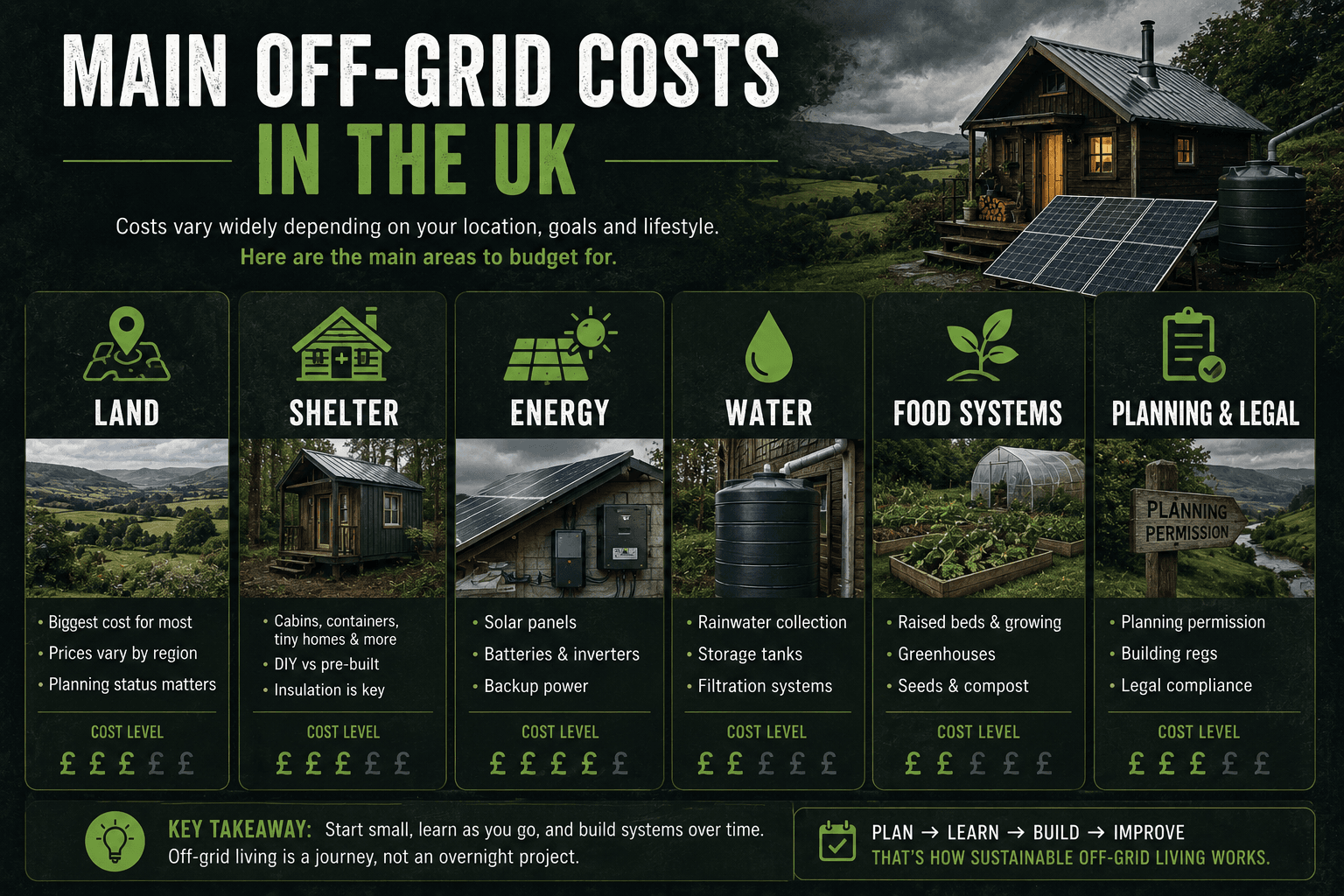
The Real Major Costs of Off-Grid Living in the UK
Land Costs
Land is usually the biggest expense in any serious off-grid setup, and it plays a huge role in your overall off grid living UK cost.
In the UK, land prices vary massively depending on:
- region
- access
- planning status
- water availability
- road access
- agricultural restrictions
Small agricultural plots may start around £10,000 to £30,000, but anything with residential planning permission can become dramatically more expensive.
One of the biggest beginner mistakes is assuming that owning land automatically means you can legally live on it.
In the UK, that is often not true.
Planning permission matters. Land use matters. Local councils matter. Yes, it is annoying. No, pretending it does not exist will not help.
Understanding land restrictions early can save huge amounts of money, stress, and disappointment later.
For official guidance, check the GOV.UK planning permission guidance.
Shelter Costs
Shelter costs can vary massively depending on how simple or advanced you want your setup to be.
Possible options include:
- converted vans
- static caravans
- tiny homes
- cabins
- container homes
- self-built structures
A very basic starter shelter may cost a few thousand pounds.
A properly insulated long-term off-grid home can easily climb above £100,000.
This is why many beginners underestimate the true off grid living UK cost before they begin.
The key is not to jump straight to the dream version.
Start with what is safe, legal, realistic, and affordable.
Solar and Energy Costs
Energy is one of the most exciting parts of off-grid living, but it is also one of the easiest places to waste money.
A small solar setup for charging phones, lights, and basic devices can be fairly affordable.
A full system for running an entire off-grid home is a completely different level of investment.
You may need:
- solar panels
- batteries
- inverters
- charge controllers
- backup generator
- cabling and safety equipment
Many beginners underestimate the cost of batteries and winter backup systems.
UK winters are not exactly generous with sunshine. Shocking news, I know.
Power systems are one of the biggest long-term factors affecting overall off grid living UK cost.
Water System Costs
Water is not optional, and reliable water systems are a major part of off-grid planning.
Your setup may involve:
- rainwater harvesting
- storage tanks
- filtration systems
- pumps
- backup supply options
A simple rain barrel system can be cheap.
A reliable year-round water system needs more thought, planning, and maintenance.
The UK gets plenty of rain, but that does not mean clean, stored, drinkable water magically appears in your cup.
Waste and Sanitation Costs
Sanitation is not the glamorous part of off-grid living, but it matters massively.
Options may include:
- compost toilets
- greywater systems
- reed beds
- septic systems
This is one area where poor planning can cause serious long-term problems.
Bad waste management is not “rustic”. It is just grim.
Beginners often ignore sanitation systems when calculating their true off grid living UK cost.
Food System Costs
A lot of beginners imagine they will grow all their food within six months.
Usually, no.
Food independence takes time, experimentation, and patience.
Starter food systems are usually simple:
- raised beds
- herbs
- potatoes
- basic vegetables
- compost systems
- small greenhouse or polytunnel
The goal early on is not total food independence.
The goal is capability.
For deeper beginner guidance, read the Off Grid Living UK FAQ.
The Cheapest Way to Start Off-Grid Living in the UK
The cheapest way to start is usually not buying land immediately.
That sounds backwards, but it is true.
The cheapest route into off-grid living usually starts with reducing dependence before making massive purchases.
Step 1: Reduce Dependence Where You Already Are
Before buying land or building cabins, look at your current life.
You can start by:
- reducing energy use
- learning solar basics
- growing food in containers
- building savings slowly
- learning practical skills
- reducing unnecessary spending
This is not as glamorous as buying a woodland plot, but it works.
Step 2: Experiment Small
Try small systems before committing huge money.
- small solar kit
- rainwater collection
- backup cooking system
- basic food growing
- emergency power storage
This helps you learn without financially face-planting into a ditch.
Step 3: Build Skills Before Buying Big
Skills lower costs.
If you can repair, grow, build, salvage, cook, filter, plan, and adapt, you need less money than someone trying to buy every solution ready-made.
That is the real off-grid advantage.
The smartest way to manage your off grid living UK cost is to start small, avoid unnecessary gear, and build systems gradually.
What Most Beginners Get Wrong
Trying to Escape Too Fast
The internet encourages dramatic moves.
Sell everything. Buy land. Build a cabin. Vanish into the woods. Become spiritually attached to a log burner.
Real life is usually more boring and more sensible.
Most successful off-grid journeys happen gradually.
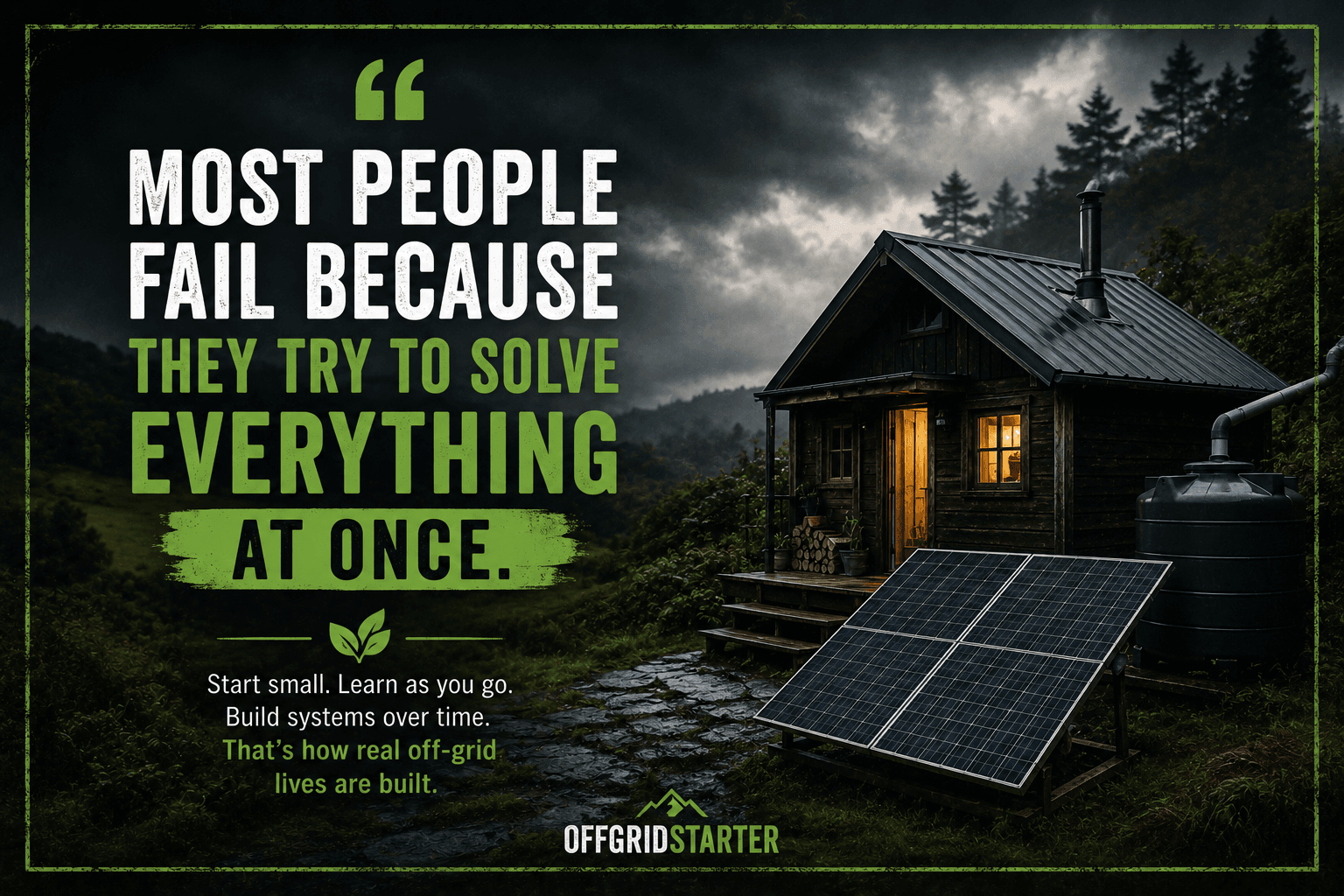
One of the biggest mistakes beginners make when calculating their off grid living UK cost is trying to solve their entire future in one giant leap.
That usually leads to:
- financial pressure
- burnout
- poor decisions
- unfinished projects
A slower and more realistic approach is often far more sustainable long term.
Buying Gear Before Building Knowledge
Expensive gear does not fix poor understanding.
A beginner with £10,000 of random equipment can still be less prepared than someone with basic tools, patience, and actual practical skills.
Knowledge saves money.
Learning:
- how energy systems work
- how water storage works
- how to grow food
- how to repair and maintain equipment
…often reduces your overall off grid living UK cost far more than endlessly buying new gadgets.
Ignoring UK Legal Reality
This is the big one.
The UK is not empty wilderness.
Planning permission, land use, building regulations, environmental rules, and council enforcement can all affect what is possible.
That does not mean off-grid living is impossible.
It means you need to move wisely.
Many beginners focus entirely on cabins and solar panels while completely ignoring legal reality until it becomes a problem later.
Understanding UK regulations early can save enormous amounts of money, stress, and wasted effort.
Is Off-Grid Living Cheaper Long Term?
It can be.
But it is not automatically cheap.
In many cases, off-grid living means higher upfront costs and lower long-term dependence.
You may spend more early on for:
- land
- shelter
- solar systems
- water infrastructure
- tools and equipment
- setup mistakes
But over time, you may reduce:
- utility bills
- rent pressure
- food costs
- dependence on fragile systems
The biggest benefit is not always financial.
It is control.
Off-grid living gives you more direct responsibility over the systems that support your life.
That is not always easier.
But for many people, it is worth it.
Long term, a carefully planned setup can reduce your overall off grid living UK cost while increasing resilience and independence.
Off Grid Living UK Cost: What Should a Beginner Budget?
Here is a rough way to think about it.
Ultra-Basic Starter Path: £500–£2,000
This is not full off-grid living.
This is early experimentation and skill building.
It may include:
- small solar kit
- basic growing setup
- water storage
- backup cooking systems
- basic tools
This level is often the cheapest way to begin reducing dependence without massive risk.
Low-Budget Transition Path: £5,000–£20,000
This may include:
- van or caravan setup
- larger solar system
- better water storage
- compost toilet
- basic land access or rental arrangement
For many people, this is where the real off-grid learning process begins.
Serious Off-Grid Setup: £30,000–£100,000+
This may include:
- land purchase
- long-term shelter
- proper renewable energy system
- water infrastructure
- planning and legal costs
- food production systems
This is where the true off grid living UK cost can rise quickly if projects are poorly planned or rushed.
These numbers are not fixed.
They are guide rails.
Your actual costs depend on:
- how much you can build yourself
- how much you can salvage
- how simply you can live
- how quickly you try to scale
Final Thoughts
The real off grid living UK cost is not just about money.
It is also about patience, skills, planning, expectations, and adaptability.
You can spend a fortune trying to recreate a normal suburban lifestyle in the middle of a field.
Or you can start smaller, learn properly, and gradually build resilience over time.
The second route is slower.
But it is usually stronger.
Off-grid living in the UK is not about escaping everything overnight.
It is about building a more resilient life one system at a time.
The smartest way to manage your off grid living UK cost is to avoid rushing, avoid hype, and focus on learning before overspending.
Turn the Cost Guide Into Your Own Priority Plan
Not sure what deserves your money first? Use the free Off-Grid Starter Priority Planner. It turns your current stage, budget boundary and unresolved essentials into a practical order of work without pretending to quote a full off-grid setup.
If you want the complete beginner roadmap after that, see the Off Grid Living in the UK — Premium Beginner Resilience Guide.
It breaks down:
- beginner priorities
- UK realities
- common mistakes
- practical first steps
- off-grid planning basics
No hype. No fantasy. Just a clearer starting point.
FAQ: Off-Grid Living UK Cost
How much does off-grid living cost in the UK?
Off-grid living in the UK can cost anywhere from a few hundred pounds for basic starter systems to £100,000+ for land, shelter, energy, water, and long-term infrastructure.
What is the cheapest way to start off-grid living?
The cheapest way is to start small by reducing energy use, learning practical skills, experimenting with basic solar, growing food, and building resilience before buying land or expensive equipment.
Is off-grid living cheaper than normal living?
It can be cheaper long term, but setup costs can be high. The financial benefit depends on your land, systems, lifestyle, and how much you can build or maintain yourself.
Do you need to buy land to live off-grid in the UK?
Not always. Some people start through land rental, van life, community projects, volunteering, or gradual self-sufficiency from their current home before buying land.
Do you need planning permission for off-grid living in the UK?
Often, yes. Permanent dwellings, land use changes, and some structures may require planning permission. Always check local rules before building or living permanently on land.
Use the Off-Grid Budget & Cost Planner to turn the ideas in this guide into a practical working plan.

