
Looking for realistic guidance on off grid living in the UK without the hype, panic, or fantasy survival nonsense?
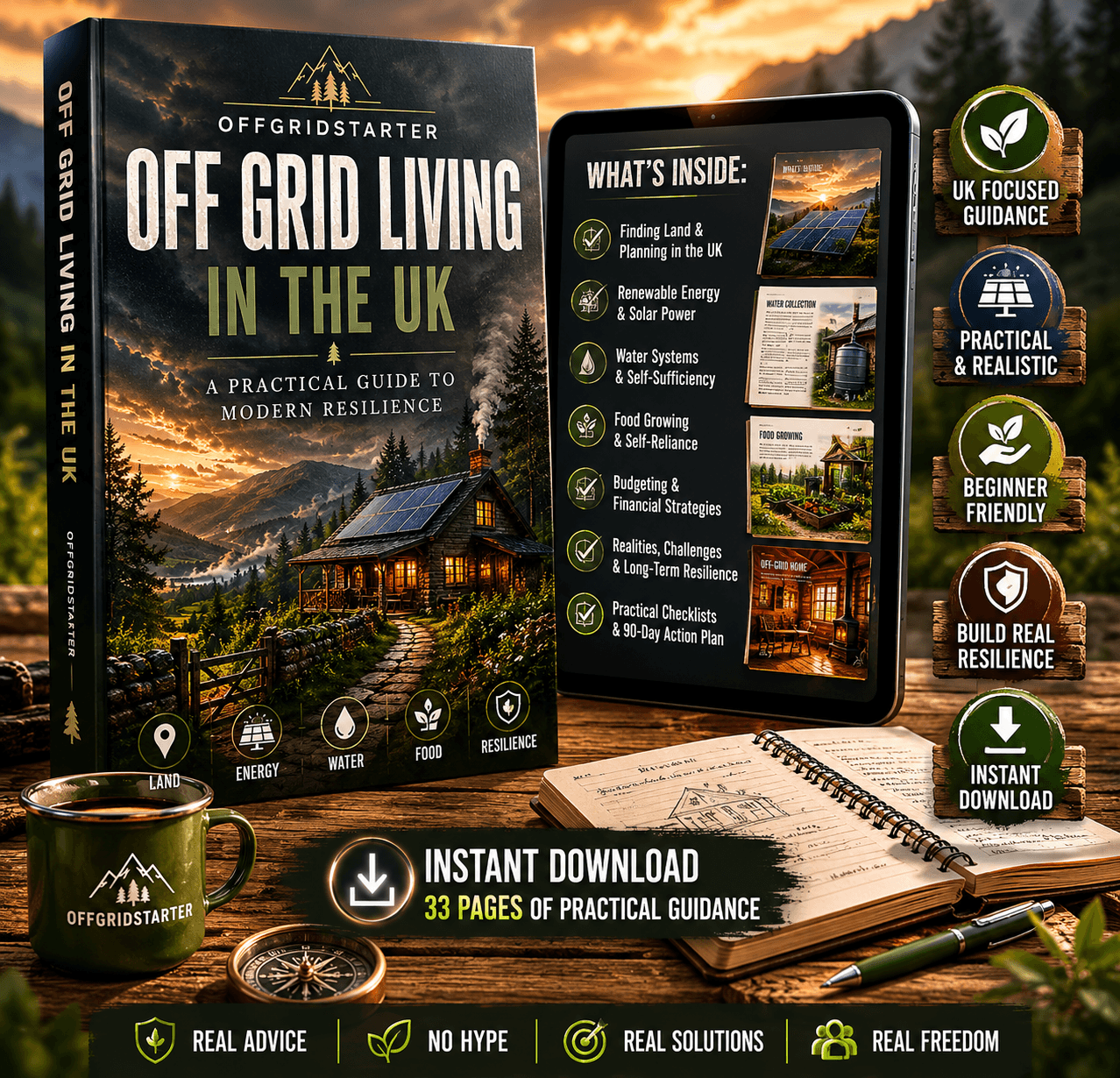
Off Grid Living in the UK — Premium Beginner Resilience Guide is a cinematic 33-page digital publication designed to help you understand the real foundations of practical off-grid living, modern resilience, and sustainable self-sufficiency in UK conditions.
This is not a generic ebook filled with unrealistic survival fantasies or expensive gear obsession.
It is a premium visual field guide created to help everyday people build calmer, stronger, and more sustainable systems step by step.
Why Off Grid Living in the UK Is Growing
Across the UK, more people are exploring off grid living in the UK as energy costs rise, modern systems become increasingly fragile, and families look for more resilient and sustainable ways to live.
But realistic off-grid living is not about panic or abandoning modern life overnight.
It is about building practical systems that improve long-term stability, reduce unnecessary dependence, and help create a calmer and more intentional lifestyle.
This guide explains how off grid living in the UK actually works in realistic British conditions, including renewable energy, water systems, food growing, shelter, resilience planning, and sustainable living strategies.
What You’ll Learn About Off Grid Living in the UK
- The real foundations of off grid living in the UK
- How renewable energy and solar systems work together
- Practical approaches to food growing and self-sufficiency
- Water collection, filtration, and storage basics
- Beginner-friendly resilience strategies
- Shelter, heating, insulation, and UK weather realities
- Budgeting and avoiding expensive beginner mistakes
- The 5-layer resilience approach to sustainable living
- How to reduce dependence on fragile modern systems
- Practical long-term off-grid planning principles
Is Off Grid Living in the UK Realistic?
Yes — but it requires realistic expectations.
Many people incorrectly assume off-grid living means living completely isolated or abandoning modern comforts entirely.
In reality, sustainable off grid living in the UK often involves gradual improvements that increase resilience over time.
This can include:
- renewable energy systems
- rainwater collection
- food growing
- lower energy dependence
- practical preparedness
- sustainable routines
- stronger household systems
The goal is not perfection.
The goal is progress.
Renewable Energy and Sustainable Systems
Renewable energy is one of the most important parts of modern off grid living in the UK.
This guide introduces practical beginner-friendly concepts around:
- solar panels
- battery systems
- backup energy
- low-energy living
- water systems
- sustainable infrastructure
The focus is on realistic and achievable systems suitable for long-term UK conditions rather than expensive overcomplicated setups.
For official renewable energy guidance, visit:
UK Government Renewable Energy Guidance
Building Long-Term Resilience at Home
True resilience is built slowly through practical systems, stronger routines, and greater awareness.
This guide helps you think more clearly about:
- sustainable living
- preparedness
- financial resilience
- home systems
- energy independence
- food security
- long-term adaptability
Rather than fear-based survivalism, the focus is on calm preparation and practical capability.
Beginner Mistakes to Avoid in Off Grid Living
Many beginners waste money and create unnecessary stress by rushing into unrealistic plans.
This guide explains common off-grid mistakes including:
- buying unsuitable land
- overcomplicated energy systems
- unrealistic budgeting
- poor planning assumptions
- unsustainable expectations
- trying to become fully self-sufficient too quickly
The guide focuses on building resilience gradually and sustainably.
Who This Guide Is For
- beginners exploring off grid living in the UK
- families wanting greater resilience and stability
- people interested in sustainable self-sufficiency
- readers seeking practical renewable energy guidance
- those wanting lower dependence on fragile systems
- anyone looking for realistic off-grid planning advice without hype
Start Building Practical Resilience Today
You do not need perfect land, huge amounts of money, or a completely off-grid lifestyle to begin building greater resilience.
You simply need a clearer understanding of what matters most and a practical place to start.
This guide was created to help ordinary people build calmer, stronger, and more sustainable systems step by step using realistic UK conditions and practical long-term thinking.
If you are serious about creating a more resilient future for yourself and your family, this guide provides a grounded and practical starting point.
Frequently Asked Questions About Off Grid Living in the UK
Is off grid living legal in the UK?
Yes. Off-grid living is legal in the UK, although planning permission, land use regulations, and building rules still apply depending on your setup and location.
Can you realistically live off grid in the UK?
Yes. Many people across the UK successfully build partially or fully off-grid systems using solar energy, rainwater collection, sustainable infrastructure, and food growing strategies.
Is this guide suitable for complete beginners?
Yes. This guide was specifically created for beginners who want practical and realistic off-grid guidance without information overload or survivalist extremes.
Does the guide explain renewable energy systems?
Yes. The guide introduces beginner-friendly renewable energy concepts including solar panels, battery storage, water systems, and sustainable infrastructure.
Is off grid living expensive in the UK?
It can become expensive if approached incorrectly. This guide explains practical ways to build resilience gradually while avoiding costly beginner mistakes.
Explore More OffGridStarter Resources
- Off Grid Living UK FAQ
- Beginner Solar Power Guides
- Water Collection Systems
- Sustainable Food Growing
- Preparedness and Resilience Articles
This guide is not about fear.
It is about practical resilience, sustainable thinking, and building systems that create greater long-term stability and independence in an increasingly uncertain world.
Reviews
There are no reviews yet.